Trail conditions: ice above 3500’, only ½’’ snow (and only at higher elevations), a lot of leaves at lower elevation (but helps a lot with the mud)
Quiet and beautiful day in the mountains. Did not see a single person nor footprint all day. My car was first and last to leave the AMR parking, although I saw in the register that about 5 other persons had signed in during the day for shorter trips.
My only objective today was to get out there and enjoy the scenery, as I was not able to truly assess trail conditions before heading out. My initial destination was Lower Wolfjaw. Forecasts were good up until the day before, when it suddenly appeared that the summits would be “obscured in clouds” or “OB” as Mountain Point Forecasts says. Bummer, but I couldn’t readily change my day off.
Started from the parking at 6:45 and was soon greeted by a rafter of turkeys and 5 minutes later by a herd of deer lounging near the tennis courts of the Ausable Club. Lake Road is a dirt road that follows a stream. You then take a foot bridge and follow part of the West River trail (following the Ausable river) until Wedge Brook trail, which follows yet another stream. The first 1.2 miles of that trail ascends on an easy to moderate grade in a deciduous forest. I then got to a designated camping spot that offers a partial view of LWJ – seems like a nice place to camp.
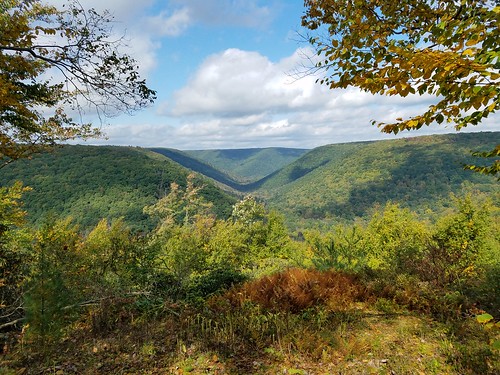
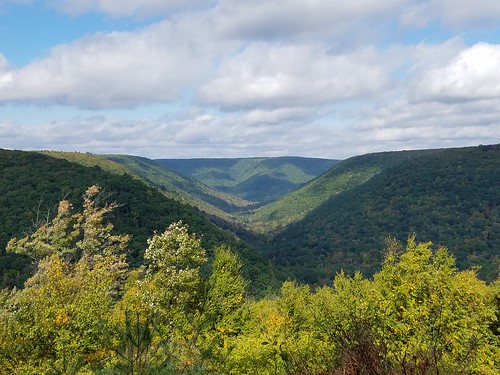
At this place, the trail veers 90o west and this is where you should switch your walking legs with your climbing legs if you have them. The ice only started to be a problem after the final junction towards LWJ. Crampons did the job and remained on for most of the day as I found them useful for not slipping on leaves going down. Ice was melting, which made for complicated footing on rocks since the ice would sometimes detach when stepped on. Quite a bit of “snowballing” too – I’ll see if I can put wax or silicone on my crampon plates to solve this. This if for those who think there is no view on LWJ:

Going down towards UWJ also gives you fantastic views towards Dix and Nippletop, which partially compensates for a great deal of elevation loss. Col between wolfjaws is quite deep, certainly more than I expected, but I was still feeling great. This picture of LWJ taken while going up UWJ gives you the idea:

Going up UWJ proved to be a challenge and although I made every effort to stay on the trail, the lack of handholds (because of ice) meant I had to bushwack once around the trail. If LWJ difficulty rating is 7/10 (just putting a number out there), then UWJ is definitely a 9/10. Here’s an interesting portion:

It was only 11:30, so I had plenty of daylight left to head on to Armstrong and make a loop out of it. I had read some TR commenting on the difficulty of Armstrong’s North ascent, but I was not relishing going back down the way I had came. Game on!
Going down UWJ was done in short order. Going up Armstrong involved much of the same as going upp UWJ, but for a much shorter duration. While both wolfjaws summits are essential a rock, Armstrong’s has a nice ledge (which I dared not look down). I force-fed myself a sandwich and continued. It was 1:05 when I got to the junction with Beaver Meadow trail. Sign says it's only 0.4 miles to Gothics and this is she taunting me:

But I had 5.4 miles yet to go and though I had the motivation and energy, I felt I did not have enough daylight remaining. See you soon, Gothics!
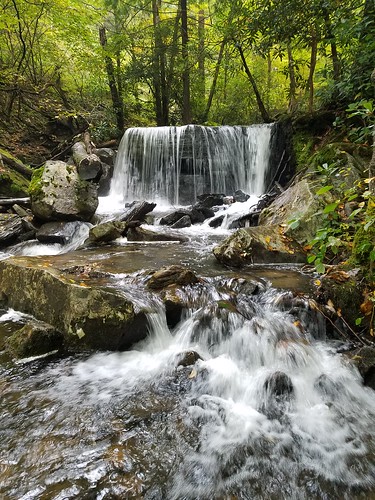
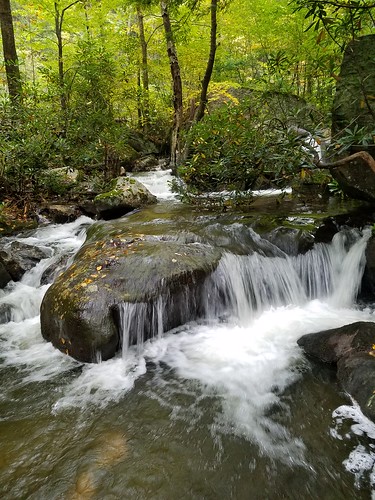
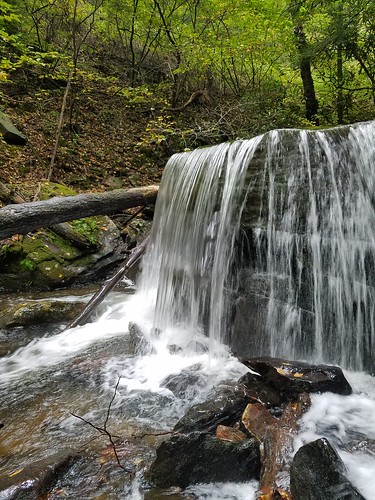
I found the 1st mile of Beaver Meadow trail simply brutal. First off, you’re actually going up for a while (with ladders, even). And then, there is a lot of vertical rock surfaces and rock scrambling. I was progressing very slowly. Fortunately, things eased off after maybe 90 minutes of that, and it was back to serene forest trekking. Beaver Meadow fall was the prize for travelling this trail:

I took the shortest way towards Lake Road and was back at my car at 4:30, but not before being greeted this time by both turkeys and deer grazing together under Mount Giant's protective watch.

Quiet and beautiful day in the mountains. Did not see a single person nor footprint all day. My car was first and last to leave the AMR parking, although I saw in the register that about 5 other persons had signed in during the day for shorter trips.
My only objective today was to get out there and enjoy the scenery, as I was not able to truly assess trail conditions before heading out. My initial destination was Lower Wolfjaw. Forecasts were good up until the day before, when it suddenly appeared that the summits would be “obscured in clouds” or “OB” as Mountain Point Forecasts says. Bummer, but I couldn’t readily change my day off.
Started from the parking at 6:45 and was soon greeted by a rafter of turkeys and 5 minutes later by a herd of deer lounging near the tennis courts of the Ausable Club. Lake Road is a dirt road that follows a stream. You then take a foot bridge and follow part of the West River trail (following the Ausable river) until Wedge Brook trail, which follows yet another stream. The first 1.2 miles of that trail ascends on an easy to moderate grade in a deciduous forest. I then got to a designated camping spot that offers a partial view of LWJ – seems like a nice place to camp.
At this place, the trail veers 90o west and this is where you should switch your walking legs with your climbing legs if you have them. The ice only started to be a problem after the final junction towards LWJ. Crampons did the job and remained on for most of the day as I found them useful for not slipping on leaves going down. Ice was melting, which made for complicated footing on rocks since the ice would sometimes detach when stepped on. Quite a bit of “snowballing” too – I’ll see if I can put wax or silicone on my crampon plates to solve this. This if for those who think there is no view on LWJ:
Going down towards UWJ also gives you fantastic views towards Dix and Nippletop, which partially compensates for a great deal of elevation loss. Col between wolfjaws is quite deep, certainly more than I expected, but I was still feeling great. This picture of LWJ taken while going up UWJ gives you the idea:
Going up UWJ proved to be a challenge and although I made every effort to stay on the trail, the lack of handholds (because of ice) meant I had to bushwack once around the trail. If LWJ difficulty rating is 7/10 (just putting a number out there), then UWJ is definitely a 9/10. Here’s an interesting portion:
It was only 11:30, so I had plenty of daylight left to head on to Armstrong and make a loop out of it. I had read some TR commenting on the difficulty of Armstrong’s North ascent, but I was not relishing going back down the way I had came. Game on!
Going down UWJ was done in short order. Going up Armstrong involved much of the same as going upp UWJ, but for a much shorter duration. While both wolfjaws summits are essential a rock, Armstrong’s has a nice ledge (which I dared not look down). I force-fed myself a sandwich and continued. It was 1:05 when I got to the junction with Beaver Meadow trail. Sign says it's only 0.4 miles to Gothics and this is she taunting me:
But I had 5.4 miles yet to go and though I had the motivation and energy, I felt I did not have enough daylight remaining. See you soon, Gothics!
I found the 1st mile of Beaver Meadow trail simply brutal. First off, you’re actually going up for a while (with ladders, even). And then, there is a lot of vertical rock surfaces and rock scrambling. I was progressing very slowly. Fortunately, things eased off after maybe 90 minutes of that, and it was back to serene forest trekking. Beaver Meadow fall was the prize for travelling this trail:
I took the shortest way towards Lake Road and was back at my car at 4:30, but not before being greeted this time by both turkeys and deer grazing together under Mount Giant's protective watch.